








Стратегическое партнерство
для устойчивого
энергетического будущего
Три страны. Единое видение зеленой энергетики.
Кто Мы
The Central Asia-Azerbaijan Green Energy project began as part of a trilateral strategic partnership between Azerbaijan, Kazakhstan, and Uzbekistan.
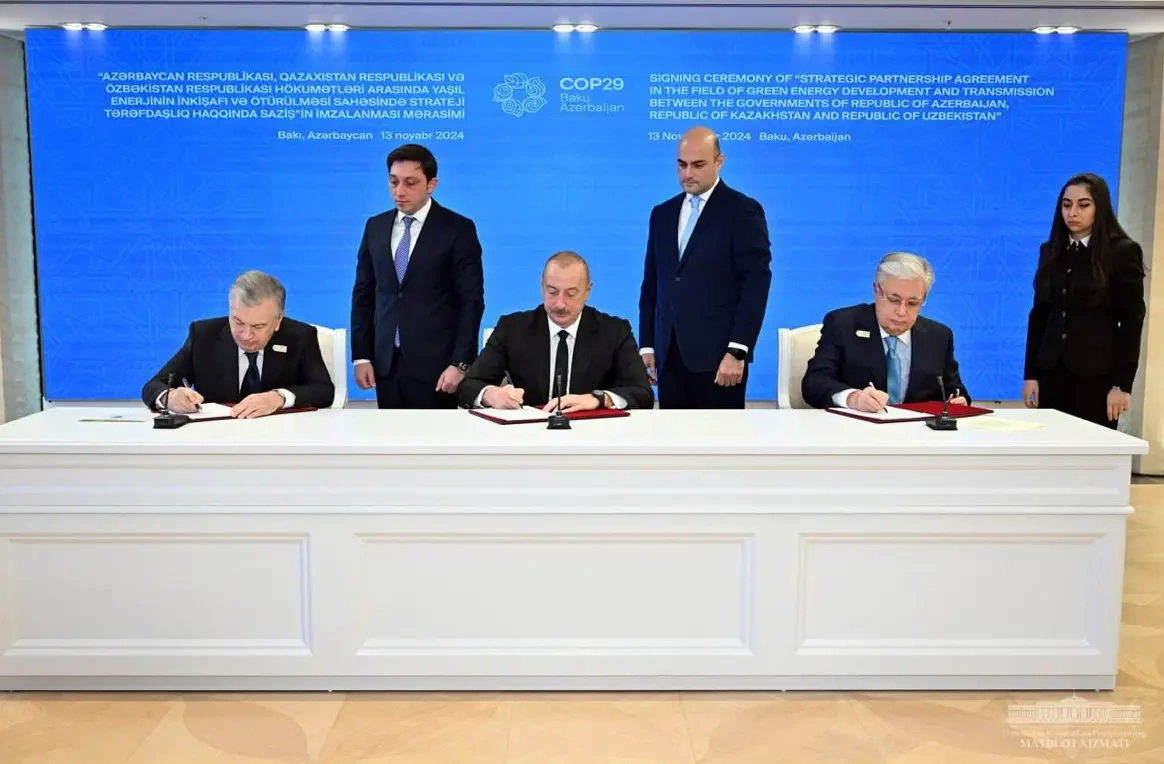
The Strategic Partnership Agreement on the Development and Transmission of Green Energy was signed during COP29 in Baku on 13 November 2024 by the President of the three countries.
In December 2024, the three national grid operators formally signed the founding documents establishing the Green Corridor Alliance Joint Venture (JV), with its headquarters in Baku.

Founding Partners
GCA’s founding shareholders represent the primary electricity network operators from three countries:

ОАО «Азерэнержи»
Республика Азербайджан

АО «KEGOC»
Республика Азербайджан

АО «Национальные электрические сети Узбекистана»
Республика Азербайджан
Наши ценности
Sustainable energy cooperation across borders, optimizing 2025-2040 renewable export strategies linking Azerbaijan, Kazakhstan, and Uzbekistan to European markets via power interconnections.
Regional integration of energy markets, enabling bi-directional trade, EU absorption of variable renewables (low/ medium/ high scenarios), and cross-border frameworks for green electricity.
Reducing carbon emissions through large-scale renewable projects, supporting GHG reduction targets by 2030 (vs. 1990 baseline) and further reductions by 2050, along with achieving Net Zero in liberated territories.
Long-term energy security and stable supply chains, with 35-year load forecasts, grid reinforcements, and frequency reserves via peak offsets.
A shared commitment to the United Nations Sustainable Development Goals (SDGs), via technical potential assessments for solar PV/wind integration over 2025-2040 horizons.
Project
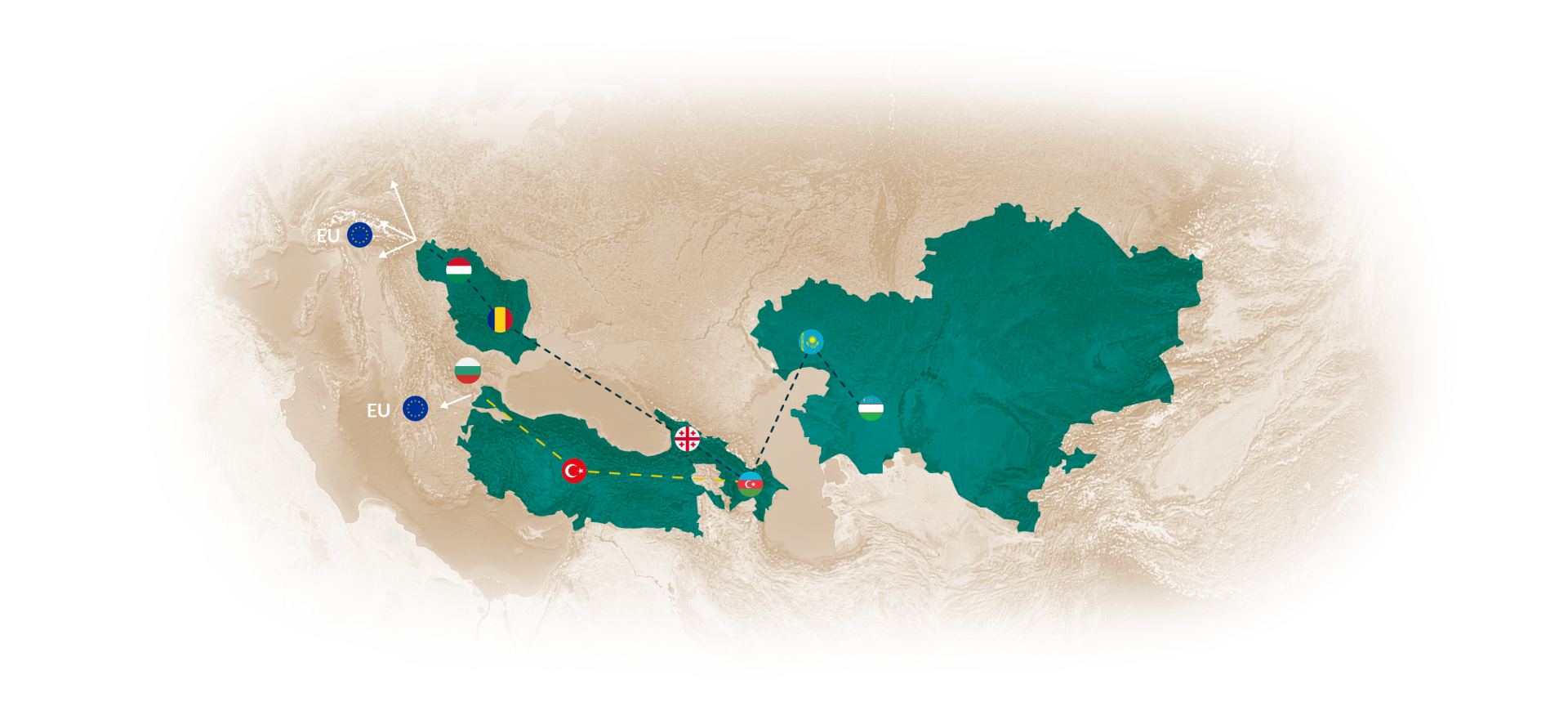
The Central Asia – Azerbaijan green corridor initiative — a trans-regional infrastructure project to develop a renewable energy export route from solar and wind-rich Azerbaijan, Kazakhstan, Uzbekistan and ultimately to European energy markets and aimed at building sustainable, secure, and interconnected green energy corridor.
This ambitious corridor will involve:
Integration of renewable generation capacity in Azerbaijan, Uzbekistan and Kazakhstan
High-voltage interconnections across territories of Uzbekistan, Kazakhstan and Azerbaijan aimed to Europe
Telecom network interconnection (fiber-optic connectivity) along the planned power transmission corridor which will connect Azerbaijan, Kazakhstan, Uzbekistan.
Feasibility analysis, led by international experts (e.g., CESI S.p.A.) for efficient design and implementation of the mentioned route.
Objectives of the Project
The Objective of this study is to investigate the technical, environmental, regulatory, and economic viability of an electrical interconnection between Azerbaijan, Kazakhstan, and Uzbekistan and the potential energy corridors connecting Central Asia and South Caucasus to European markets.
Project Structure
Стадия I Determine the recommended option for electrical grid construction
Стадия II Conceptual system design
Стадия III Energy trading model and contractual arrangement
Regional Impact
Energy Security & Sovereignty
By linking power systems regionally, GCA enhances energy reliability and resilience across participant countries—reducing dependence on fossil fuels and outdated infrastructure. The project enables bi-directional frequency reserves through non-coinciding daily peaks, seasonal power sharing and grid reinforcements for stable interconnection operation, cutting balancing costs while maintaining reserve margins and ramp-rate limits.
Sustainable Development
The initiative supports national commitments to increase renewable energy shares and lower carbon emissions, contributing directly to climate goals under the UN SDGs. It drives 2025-2040 renewable export strategies via three VRE production scenarios, EU market absorption analysis (low/medium/high import profiles), and environmental route assessments for onshore/subsea corridors, tying into Azerbaijan-Georgia-Black Sea-Romania and Nakhchivan-Türkiye pathways.
Market Integration
The corridor makes Central Asian renewable power more competitive and accessible to international markets — particularly in Europe — and supports regional export platforms across energy networks.

International Cooperation
GCA strengthens diplomatic and economic ties with key partners including the Asian Development Bank (ADB) and Asian Infrastructure Investment Bank (AIIB), which support feasibility studies and financing frameworks, while fostering ongoing regional dialogue through a dedicated Working Group (or Joint Venture) representing Azerbaijan, Kazakhstan, and Uzbekistan governments.
This coordinated effort facilitates data sharing, kick-off meetings, structured discussions on cross-border legal frameworks and compliance risks, consultations with local authorities, environmental agencies, and international bodies for permits, plus power purchase/export agreements and stakeholder engagement across the three countries.
GCA advances strategic cooperation with global technology partners such as Siemens AG through the signing of a Non-Disclosure Agreement focused on green energy infrastructure and regional connectivity. Siemens’ expertise in grid integration, system stability, and HVDC transmission design will contribute to the technical development and long-term operational resilience of the corridor.
As Europe accelerates its transition toward decarbonization and energy independence, large-scale renewable electricity imports are becoming an essential component of the future energy system. In this context, the corridor represents a practical infrastructure solution that supports energy security, cross-border connectivity, and sustainable regional integration.


News & Publications
Stay updated on the latest developments from GCA and its partners: